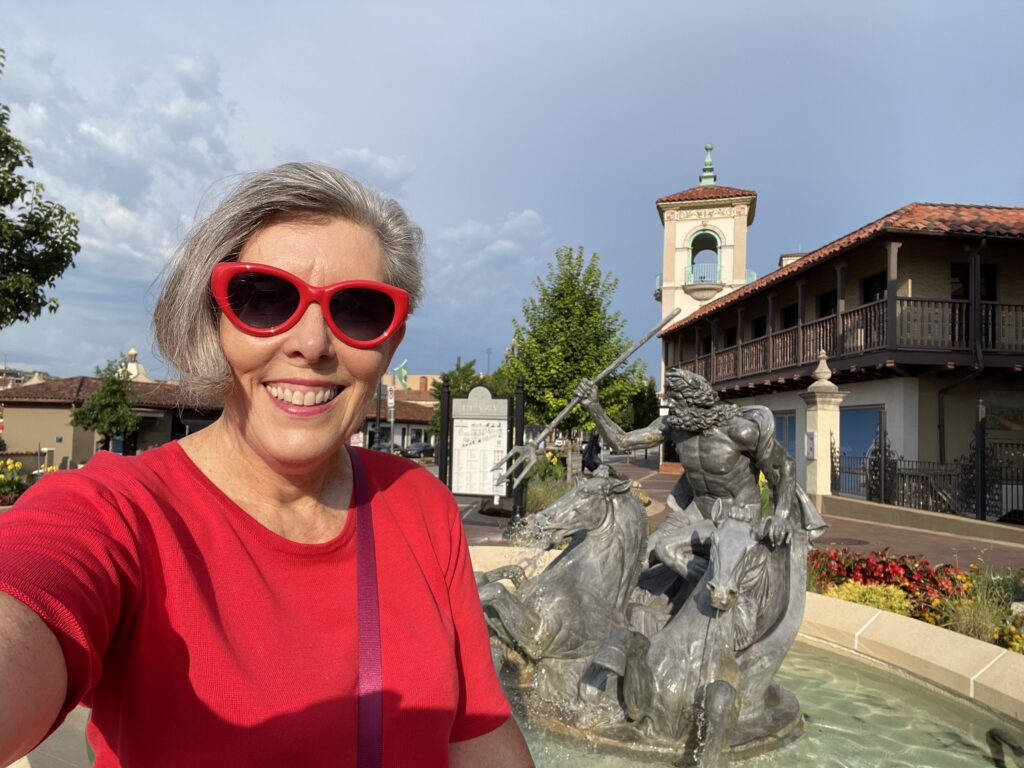
The other day, I set out to visit one of my favorite shops on the Country Club Plaza. It wasn’t far away, and I wasn’t trying to go somewhere new. My plan was to follow the same route I’ve taken many times before.
Except this time, I had a walker.
As I approached the intersection, I realized I couldn’t simply continue straight ahead. The route I’d always taken included a set of stairs. Instead, I crossed the street, traveled down the block, crossed back again, and finally reached my destination.
It was only a few extra minutes, but it changed the way I navigated my world.
For the past couple of weeks, I’ve been recovering from knee replacement surgery. My limitations are temporary, and I’m deeply aware that many people navigate mobility challenges every day with no clear finish line in sight. Even so, this brief season has opened my eyes to things I had never fully appreciated before.
Years ago, during John’s cancer journey, there were times when he relied on a wheelchair. I remember circling parking lots looking for an accessible parking space. I remember returning to the car only to find someone parked so close that getting him back into the vehicle became an ordeal. I thought I understood accessibility then.
I did.
But I didn’t understand all of it.
There’s something different about being the person calculating every curb, every staircase, every doorway, and every outing before you leave home. Suddenly, familiar places aren’t quite as simple as they once were.
I also became aware of something unexpected: people’s eyes.
More than once, I noticed someone glance first at my walker, then up at me, and finally down toward the bandage covering my knee. Once they saw it, there seemed to be a subtle shift, almost as if the puzzle had been solved. A woman wearing running shoes and a skort using a walker suddenly made sense.
I wasn’t offended.
At first, I felt a little self-conscious. Then I found myself smiling because I realized I probably would have done the same thing. We’re naturally curious. We try to make sense of what we see.
But it also made me think about the people whose disabilities don’t come with an obvious explanation.
Over the years, through my cancer advocacy work, I’ve heard from people who live with invisible disabilities. Some have shared stories of receiving questioning looks when they use an accessible restroom because they “don’t look disabled.” Many people navigate chronic illnesses, ostomies, chronic pain, or fatigue that no one else can see.
It reminded me how often we assume we know someone else’s story based on appearances alone.
Several years ago, I heard an engineer speak about accessibility and universal design. One statement has stayed with me ever since: accessibility features benefit everyone.
She’s right.
A ramp doesn’t only help someone using a wheelchair. It helps parents pushing strollers, travelers pulling suitcases, delivery drivers with carts, and anyone whose knees aren’t cooperating that day.
Wider doorways make life easier for everyone.
Automatic doors help all of us.
When John was navigating his cancer journey, my nephew installed decorative grab bars in our home. Unless I point them out, most visitors never realize they’re grab bars at all. They blend seamlessly into the house while discreetly making it safer for anyone who needs a little extra support.
Accessibility isn’t about creating special spaces for a few people.
It’s about creating spaces where more people can participate.
The same is true beyond buildings and sidewalks.
Accessibility can look like holding a door without making someone feel rushed. It can mean offering patience instead of assumptions. It can mean believing people when they tell us what they need without asking them to prove it.
Recovery has reminded me that one day I’ll likely walk the direct route again. I’ll stop thinking about every curb, every step, and every automatic door.
My hope is that I won’t stop noticing them.
Because accessibility isn’t simply about ramps, grab bars, or parking spaces. It’s about creating a world where people can participate without having to justify why they need a different path.
And that’s a path that benefits us all.
Note: This post is shared during Disability Pride Month. My experience with limited mobility is temporary, and I recognize that many people navigate these barriers every day. I’m grateful for the perspective this season has given me and hope sharing it encourages all of us to build communities that are more accessible, inclusive, and welcoming for everyone.