
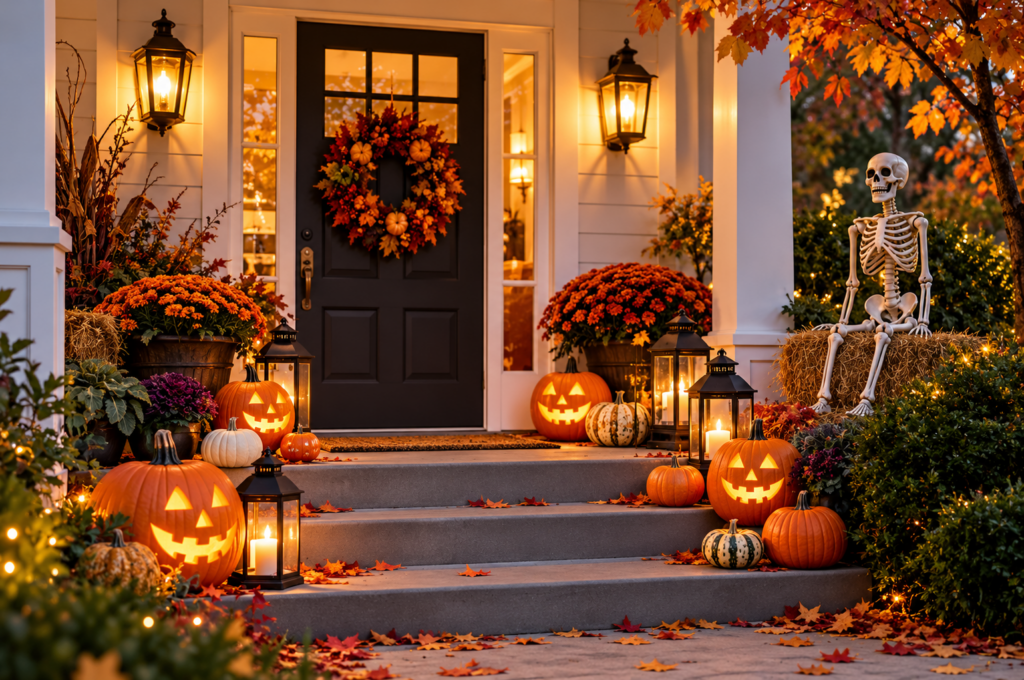
Every October, we seem to develop a fascination with death. Skeletons appear on front porches, tombstones pop up in front yards, and ghosts hang from trees. We watch scary movies, visit haunted houses, and dress up as everything from witches to the Grim Reaper.
And we have a wonderful time doing it!
I happen to love Halloween. One of my family traditions is getting dressed up and going to a local restaurant that goes all out with its Halloween decorations. We enjoy a good meal, admire the decorations, and have fun together.
I also love handing out candy to trick-or-treaters. Unfortunately, I live in a historic building that doesn’t allow children to come inside for trick-or-treating. I always feel like I’m missing out! So, I keep a bowl of candy in our elevator lobby throughout October, and on Halloween night, I take my candy to a friend’s house so I can help hand out treats.
Clearly, I’m not someone who shies away from Halloween.
But here’s something I’ve always found interesting. We’re perfectly comfortable surrounding ourselves with pretend death for an entire month. Yet when the conversation turns to actual death, things can get uncomfortable pretty quickly.
The Conversation Nobody Wants to Have
When people learn that I’m an end-of-life educator, I sometimes get a familiar response.
“Oh, I’m not ready to talk about that yet.”
I understand. Death isn’t exactly everyone’s favorite dinner conversation. And I certainly don’t expect people to spend their days contemplating their mortality.
But I often explain that much of my work isn’t about dying. It’s about helping people have conversations with those they love while they still can.
We talk about what matters most to us, what kind of care we’d want if we became seriously ill, and what we’d want our families to know if they ever had to make difficult decisions on our behalf.
These conversations aren’t always easy. But they can be an incredible gift.
Think about it. When someone we love becomes seriously ill and can no longer speak for themselves, we want to do the right thing. We want to make decisions that reflect their values and wishes.
But if we’ve never had those conversations, how can we be sure?
We may find ourselves wondering whether we’re making the decision they would have wanted. That uncertainty can be a heavy burden to carry, sometimes long after the decision has been made.
Having a conversation ahead of time doesn’t eliminate the sadness or difficulty of those moments. But it can provide something invaluable: the comfort of knowing we’re honoring the wishes of someone we love.
Maybe Death Doesn’t Have to Be So Scary
A few years ago, I had an experience that gave me a different perspective on how we acknowledge death.
In 2023, I traveled to Mexico City for Día de Muertos, or Day of the Dead. I was welcomed into the home of a local family for dinner and later joined them at the cemetery to remember and celebrate their loved ones.
There were marigolds everywhere, along with candles, music, food, and photographs. Families gathered to share stories and honor those who had died.
What struck me most was the joy. Death wasn’t being ignored or hidden away. The people who had died were still very much a part of the evening through the memories and love of those who remembered them.
Día de Muertos and Halloween are different traditions, with their own histories and meanings. But experiencing that celebration helped me think differently about our relationship with death.
It also inspired the name of my business, Marigold Path. I shared more about that experience in an earlier blog, Why I Named My Business Marigold Path.
That evening reminded me that acknowledging death doesn’t mean we stop celebrating life. In fact, sometimes it helps us appreciate life even more.
Making Room for the Real Conversations
There’s a term for something I spend a lot of time teaching: death literacy.
It simply means having the knowledge, skills, and confidence to talk about death, dying, and grief, and to make informed decisions when those situations arise.
It doesn’t mean we have to become fearless about death. And it certainly doesn’t mean we have to be comfortable with every aspect of it.
It means recognizing that death is part of life and that talking about it doesn’t make it happen any sooner.
Sometimes people worry that bringing up the subject will upset someone they love. Others think there’s plenty of time to have those conversations later.
And sometimes, we just don’t know where to begin.
The good news is that we don’t have to tackle everything in one conversation. We can start small.
Maybe it’s asking a parent what matters most to them as they grow older. Maybe it’s sharing our own thoughts about the care we’d want if we became seriously ill. Or maybe it’s simply talking about someone we’ve lost and sharing a favorite memory.
These conversations don’t have to be gloomy or frightening. They can be filled with love, laughter, and sometimes even a little humor.
And they don’t have to happen all at once.
A Different Kind of Halloween Treat
I’ll still be dressing up for Halloween, enjoying the decorations, and finding somewhere to hand out candy. I love the fun of it all, and I wouldn’t change a thing.
But perhaps all those skeletons, ghosts, and tombstones can also serve as a gentle reminder that death doesn’t have to be a subject we avoid the other eleven months of the year.
We don’t have to become fearless about death. We just need to become a little less afraid of talking about it.
Because someday, the people we love may be faced with decisions we can no longer make for ourselves.
And one of the greatest gifts we can give them isn’t something wrapped in paper or tucked into a Halloween treat bag.
It’s the comfort of knowing what matters to us, so they don’t have to guess.
Now, pass the candy! 🎃