
September is National Preparedness Month, which usually brings to mind things like emergency kits, severe weather plans, batteries, flashlights, and knowing where to go if something unexpected happens.
We prepare for all kinds of things.
We make financial plans. We buy insurance. We create backup plans for work. We map out vacations. We keep jumper cables in the car.
And yet, when it comes to preparing for serious illness, incapacity, or end of life, many people hesitate.
Some worry that talking about it feels negative. Others feel like planning for something somehow makes it more likely to happen.
I see it differently.
Prepared doesn’t mean pessimistic.
Prepared means thoughtful.
And sometimes, preparation is one of the greatest gifts we can give the people we love.
Before Illness, the Conversation Feels Different
I am a planner by nature. Maybe that comes from years of project management, but planning has always felt normal to me.
Early in our marriage, John and I talked about end of life.
Neither of us was sick.
There was no crisis.
There was no diagnosis hanging over the conversation.
Because of that, it felt less like talking about death and more like talking about values.
What mattered to us?
What did quality of life mean?
What would we want if we were seriously ill?
What would we not want?
What kind of decisions would we want the other person to make?
John was always very clear that quality of life mattered more to him than simply extending life.
He wanted to live fully.
That mattered later.
When cancer entered our lives, those conversations became much harder to have.
Suddenly, end-of-life planning was no longer hypothetical.
It was about him.
It was about us.
And I am grateful that we had already talked about so much of it before we were in that position.
There is something very different about saying, “What do you think is important at the end of life?” when both people are healthy, versus asking that same question after a serious diagnosis.
Before illness, it can be a conversation between two people about values, goals, independence, comfort, and what matters most.
After illness, it’s uncomfortable because it feels like a conversation specifically about one person.
That emotional shift is one reason I encourage people not to wait.
Knowing Versus Hoping
My experience with my mom was very different.
She was not as comfortable talking about or planning for end of life.
It was overwhelming to consider the possibilities so she felt that my sister and I could make decisions in real time when the time came.
And we did.
We made the best decisions we could with the information we had.
But the experience felt very different from the one I had with John.
When John died, I knew I was doing right by him because we had talked about what mattered to him.
When my mom died, I hoped I was doing right by her.
That difference has stayed with me.
It is one of the reasons I believe so strongly that planning is a gift to the people you leave behind.
Grief is already disorienting.
When someone is seriously ill or dying, families are often tired, overwhelmed, frightened, and trying to process a tremendous amount of information.
In the middle of that, it can be incredibly reassuring to be able to say:
“I know this is what she wanted.”
“I know this mattered to him.”
“I know we are honoring their wishes.”
That certainty doesn’t take away the sadness.
But it can take away some of the doubt.
Planning Doesn’t Mean Planning Every Detail
Preparation also doesn’t mean you have to script everything.
John knew that he wanted to be cremated.
He also wanted his ashes scattered in places he loved.
What he did not leave me was a list of places.
That part was mine to figure out.
At the time, I had no idea how meaningful that would become.
I began returning to places that mattered to him and to us.
Sometimes I traveled alone.
Sometimes I brought family members with me.
Those trips became part of my healing in ways I never expected.
Returning to places filled with memories gave me a way to reconnect with parts of our life together.
And when I brought family members, I got to share those places and stories with them.
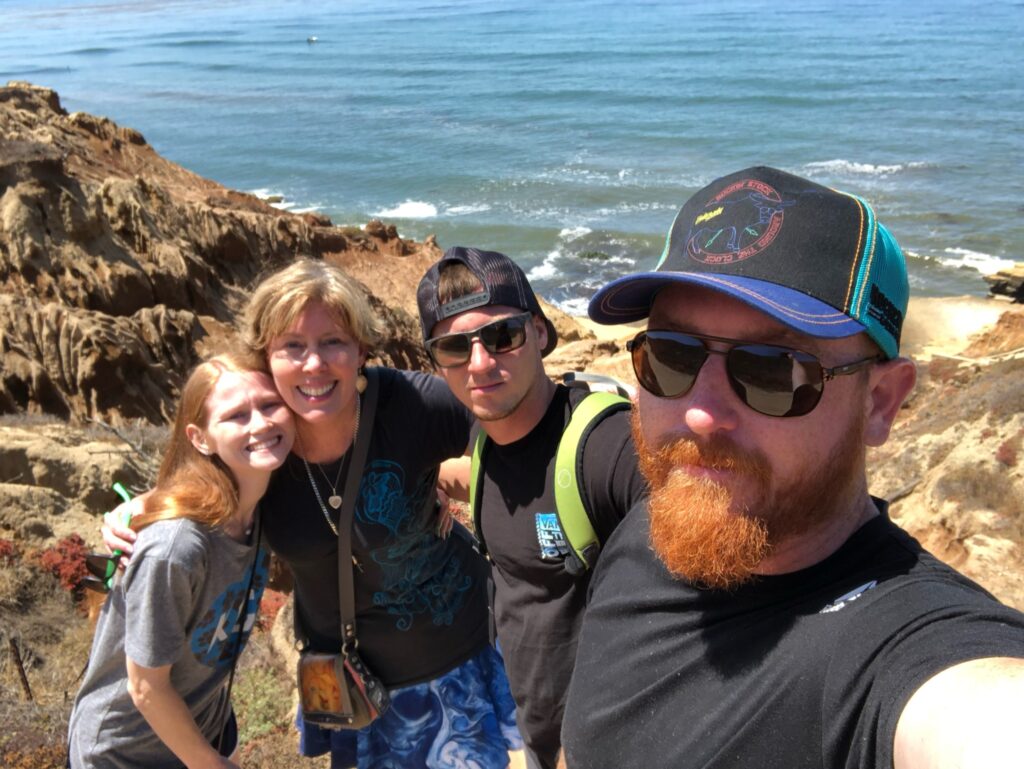
I remember taking my two adult nephews and niece to San Diego.
We drove up the coast, hiked down toward the shore, and watched the surfers.
It brought me joy to share that part of Uncle John with them.
They knew him, of course.
But they got to see another piece of him through a place he loved.
That experience taught me something important about planning.
John gave me direction without giving me a script.
He told me what mattered.
That was enough.
The Goal Isn’t Control
None of us can control exactly how illness, dying, or grief will unfold.
That isn’t the point.
The point is to make the path a little clearer for the people who may one day have to walk it.
Preparation can mean completing legal documents.
But it can also mean talking about quality of life.
It can mean sharing what brings you comfort.
It can mean talking about where you want to be cared for.
It can mean telling someone whether certain traditions matter to you.
It can mean saying, “This is what I would want,” while there is still time to have a calm conversation about it.
In my work, I try to help people break those conversations into smaller, more manageable pieces.
You do not have to solve everything in one evening.
You do not have to create a binder with every detail of your future.
You just have to start.
One conversation.
One decision.
One piece of information shared with the person who may someday need it.
A Gift for the People You Love
We prepare for weather emergencies because we know uncertainty is easier to face when we have a plan.
We prepare financially because we want to protect the people we love.
We make travel plans because we want things to go more smoothly.
Preparing for serious illness or end of life is not so different.
It is not predicting that something terrible is about to happen.
It is acknowledging that life is uncertain and deciding to make things a little easier for the people who matter to us.
I am grateful that John and I talked about these things before cancer made the conversation harder.
I am grateful that I knew what mattered to him.
And I know what it feels like when that clarity is missing.
Prepared doesn’t mean pessimistic.
Sometimes, it means loving someone enough to make the difficult days a little less difficult.