For years, I’ve written and spoken about caregiving.
I’ve talked about the emotional weight caregivers carry, the difficult decisions they face, the exhaustion, the uncertainty, and the many ways they show up for the people they love.
I thought I understood caregiving.
Then, last Friday, I became the one who needed a caregiver.
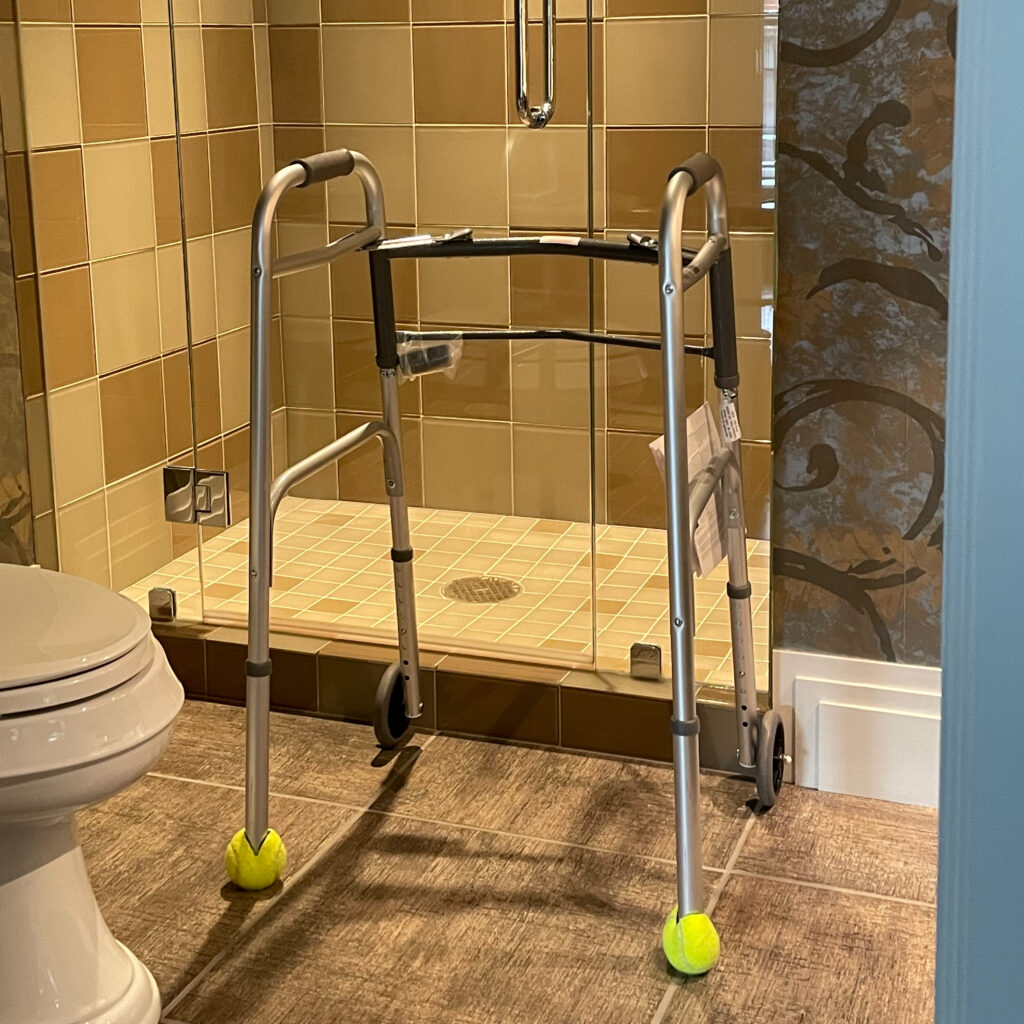
After knee replacement surgery, I came home using a walker, still under the effects of pain medication, and unable to care for myself. I couldn’t safely get to the bathroom alone. I couldn’t carry a glass of water because both hands were needed to steady the walker. Even the simplest tasks suddenly required another person.
I expected the pain.
I didn’t expect the vulnerability.
One moment, in particular, has stayed with me.
After taking a shower, I made my way to a chair to dry off. Then I looked down at my feet and realized I couldn’t bend my knee enough to reach my toes. I couldn’t dry them. I couldn’t put on my compression socks. I couldn’t get dressed without help.
It wasn’t dramatic.
It was deeply humbling.
Another moment came during the night.
I woke up needing to use the bathroom. Under normal circumstances, I would have gotten out of bed, taken care of things, and climbed back under the covers without giving it a second thought.
Instead, I stared at the two stairs leading to my bathroom.
Going up them seemed manageable.
Coming back down in the middle of the night felt much more intimidating.
To make that trip safely, I had to wake someone who was sound asleep.
I remember lying there for a moment, not thinking about my knee, but wondering if I should bother them.
That was something I hadn’t fully appreciated before.
As caregivers, we often worry about burdening the people we love.
As someone receiving care, I discovered that we worry about burdening our caregivers, too.
Every request carries its own emotional weight.
Can you help me up?
Can you hand me that?
Can you stay nearby?
Can you help me get dressed?
Those words don’t come easily when you’ve spent most of your life being independent.
This experience also changed how I think about what caregiving actually looks like.
Before, I thought of caregiving in terms of the big responsibilities, such as doctor appointments, medications, advocating with healthcare providers, difficult conversations, and making important decisions.
Those things are certainly part of it.
But caregiving is also made up of hundreds of ordinary moments that most people never see.
Carrying a glass of water because someone else can’t.
Standing nearby while they navigate two stairs.
Waiting patiently while they move at half their normal speed.
Helping with socks.
Opening a door.
Refilling an ice pack.
Adjusting a pillow.
The individual moments seem small.
Together, they become someone’s entire day.
One of the things that struck me most was realizing that my caregiver wasn’t living their normal day.
My schedule had become their schedule.
Instead of doing what they might have otherwise been doing, they were helping me get from one ordinary task to the next. They were planning around medication schedules, meals, physical therapy, and slow walks with a walker.
That realization gave me an even deeper appreciation for the countless caregivers who rearrange their lives every single day without expecting recognition.
There is one important difference between my experience and the reality many families face.
My situation has an end in sight.
Every day, I expect to become a little stronger. I know that, with time and physical therapy, I’ll likely return to the activities I enjoyed before surgery, perhaps even moving better than I did before.
Many people living with chronic illness, disability, or progressive disease don’t have that same certainty.
Neither do the people caring for them.
That perspective has stayed with me throughout this recovery.
I’ve been a caregiver for my husband during cancer, for family members, and for others throughout my life. I thought I understood what caregiving required because I had lived it.
Now I realize there was another lesson waiting for me.
Caregiving isn’t only about managing medications or getting someone to appointments.
It’s about protecting someone’s dignity when they temporarily, or permanently, can’t do it alone.
It’s found in the ordinary moments that rarely get noticed.
And now that I’ve experienced those moments from the other side, I have an even deeper appreciation for the people who consistently show up every day to make them possible.
If you’re caring for someone today, please know this: the little things matter.
They matter more than you may ever realize.
Sometimes the greatest expressions of love aren’t found in the extraordinary moments.
They’re found in drying someone’s feet, carrying their glass of water, or patiently walking beside them as they take two careful steps back to bed.